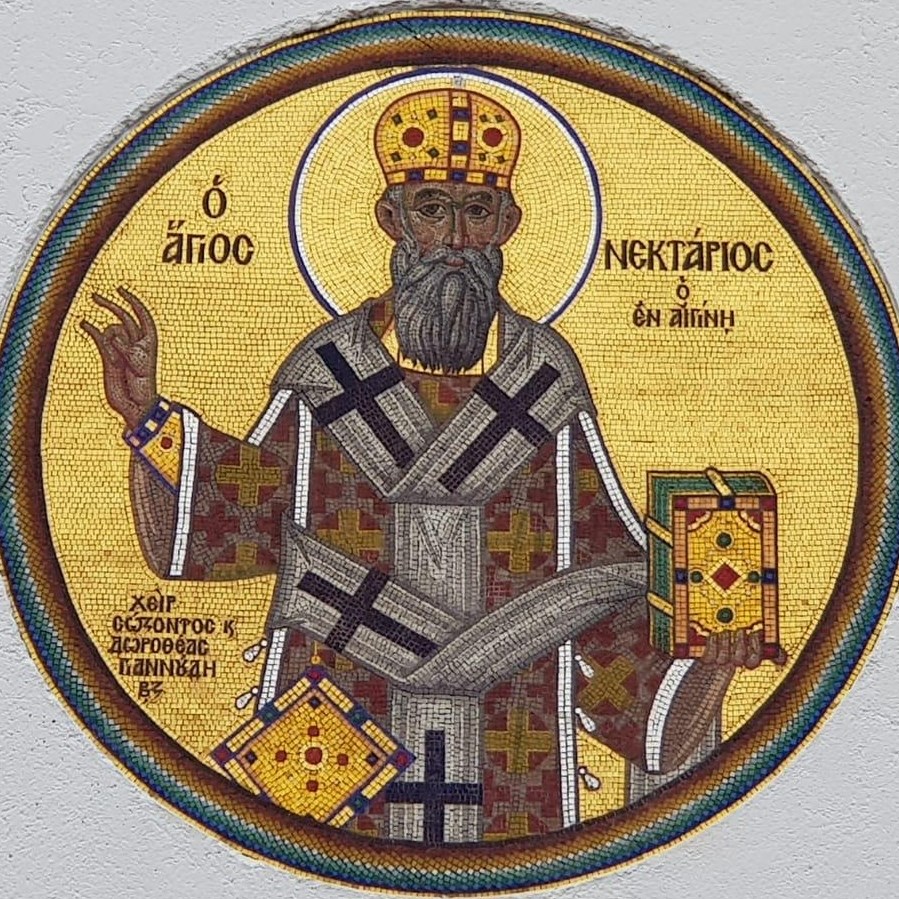
1 Oct 1846Born, Selymbria, Thrace
1889Metropolitan of Pentapolis
8 Nov 1920Reposed in Athens
1961Recognised as a saint
1846
Birth in Thrace
Born on 1 October in Selymbria (Silivri), Eastern Thrace, and baptised Anastasios Kephalas.
c. 1860
Constantinople
At about fourteen he went to Constantinople to work. While there he studied at the school of the Metochion of the Holy Sepulchre.
Chios
Teacher on Chios
He moved to the island of Chios and taught for several years in the village of Lithion.
1876
Monastic tonsure
On 7 November he was tonsured a monk at the Nea Moni (New Monastery) of Chios and given the name Lazaros.
1877
Deacon Nektarios
On 15 January he was ordained deacon and received the name Nektarios.
1885
Theology in Athens
He graduated from the Theological School of the University of Athens.
1886
Priest in Egypt
Ordained priest in Alexandria on 23 May by Patriarch Sophronios. He served the Patriarchate in Cairo, at the Church of St Nicholas.
1889
Metropolitan of Pentapolis
Consecrated bishop with the title Metropolitan of Pentapolis, an ancient see in North Africa.
1890s
Slander and exile
Slanderous accusations were made against him, and he was removed from Egypt. He went to Greece without money or support. He did not defend himself, and in 1891 he accepted a humble post as a diocesan preacher in Phthiotis and Phokis.
1894
Rizarios School, Athens
Appointed director of the Rizarios Ecclesiastical School in Athens, where he trained future priests and teachers for many years. He was loved for his gentleness and his humility.
1904
Holy Trinity Monastery, Aegina
He founded a monastery for women on the island of Aegina. He later retired there and spent his last years in prayer, writing and spiritual guidance of the nuns.
1920
Repose
He fell gravely ill and was taken to an Athens hospital, where he was placed in a ward for the poor. He died on the evening of 8 November, aged 74, and was buried at his monastery on Aegina.
1953
Translation of the relics
His relics were taken up from the grave. Their translation is commemorated every year on 3 September.
1961
Canonisation
On 20 April the Ecumenical Patriarchate of Constantinople formally recognised him as a saint. His feast is kept on 9 November.
This timeline follows the standard published lives of the Saint. Sources are listed in the Further Reading library.